
LATECE Projects
Legacy Projects Showcase
The purpose of LATECE’s Legacy Projects initiative is to support projects that promote interdisciplinarity and capitalize on the strengths of LATECE’s members. The initiative also serves as a showcase for innovative and forward-looking LATECE projects that offer promising and concrete impacts that may be of interest to the business community and society more broadly.
View the Legacy Projects showcase
Featured Projects Showcase
In view of making LATECE projects more accessible to the general public and to stakeholders such as industry and policy-makers, the Featured Projects showcase is an opportunity to present the recent and ongoing work of LATECE members in plain language. The showcase is geared towards giving citizens and stakeholders some insight into the work and impacts of the laboratory’s members by highlighting the societal challenges they seek to address and the solutions they seek to propose.
View the Featured Projects showcase
All projects Showcase
A catalog of ongoing project led by LATECE members and their sources of funding.
LEGACY PROJECTS SHOWCASE

Protecting Privacy and Reducing Asymmetry in the Retailer-Consumer Relationship (2021–2023)
Customer experience mobile apps help retailers better understand their customers and market trends. The benefits for customers are less straightforward. While relevant to retailer-consumer interactions, the amount of customer information captured by these apps often far exceeds what is necessary and involves risk such as data leaks. This project experimented with new retailer-consumer interactions that prioritize privacy through specific, realistic, and feasible scenarios.
LATECE Members: Gambs, Guéhéneuc, Killijian and Privat

Detecting Insidious Behavior in Free Android Games for Children (2023–2025)
Mobile gaming raises critical ethical questions such as profiling for marketing purposes, persuasive design that prompt young users into microtransactions, and stay online for as long as possible. This project aimed to automatically detect what we call “anti-features,” including those tied to advertising, personal data collection, and microtransactions. The project will aim to identify these anti-features and implement automatic detection mechanisms.
LATECE Members: Privat and Bonenfant

Implementing an Anonymous Authentication and Low Latency m-Health Solution (2021–2023)
This project proposed a mobile health (m-health) solution for the medical Internet of Things aimed at balancing response speed, reliability of results, and privacy protection. In light of the limitations of cloud computing and edge computing, the approach integrates Named Functions Networking (NFN) with a Software-Defined Network (SDN) architecture to minimize overall response time. The developped solution collects and analyzes users’ physiological data to rapidly detect symptoms of a virus and limit its spread. It and relies on an anonymous authentication protocol that protects the privacy of the data exchanged.
LATECE Members: Elbiaze and Gambs

It is better to be (Type-) safe than sorry? Understanding the costs and benefits of migrating to TypeScript in popular open-source projects (2023–2025)
Programming languages evolve to adapt to the ever-changing landscape of technology. Yet not all new features are worth the effort of adoption. The risks tied to migrating legacy code may dwarf the anticipated benefits. Among the latest programming language developments, TypeScript proposes an exciting shift to JavaScript projects. This large-scale study sought to understand the costs and benefits of using TypeScript in open-source JavaScript projects. The project investigated code base migration strategies, their costs, impacts and benefits and provides guidelines for practitioners.
LATECE Members: Costa and El Boussaidi
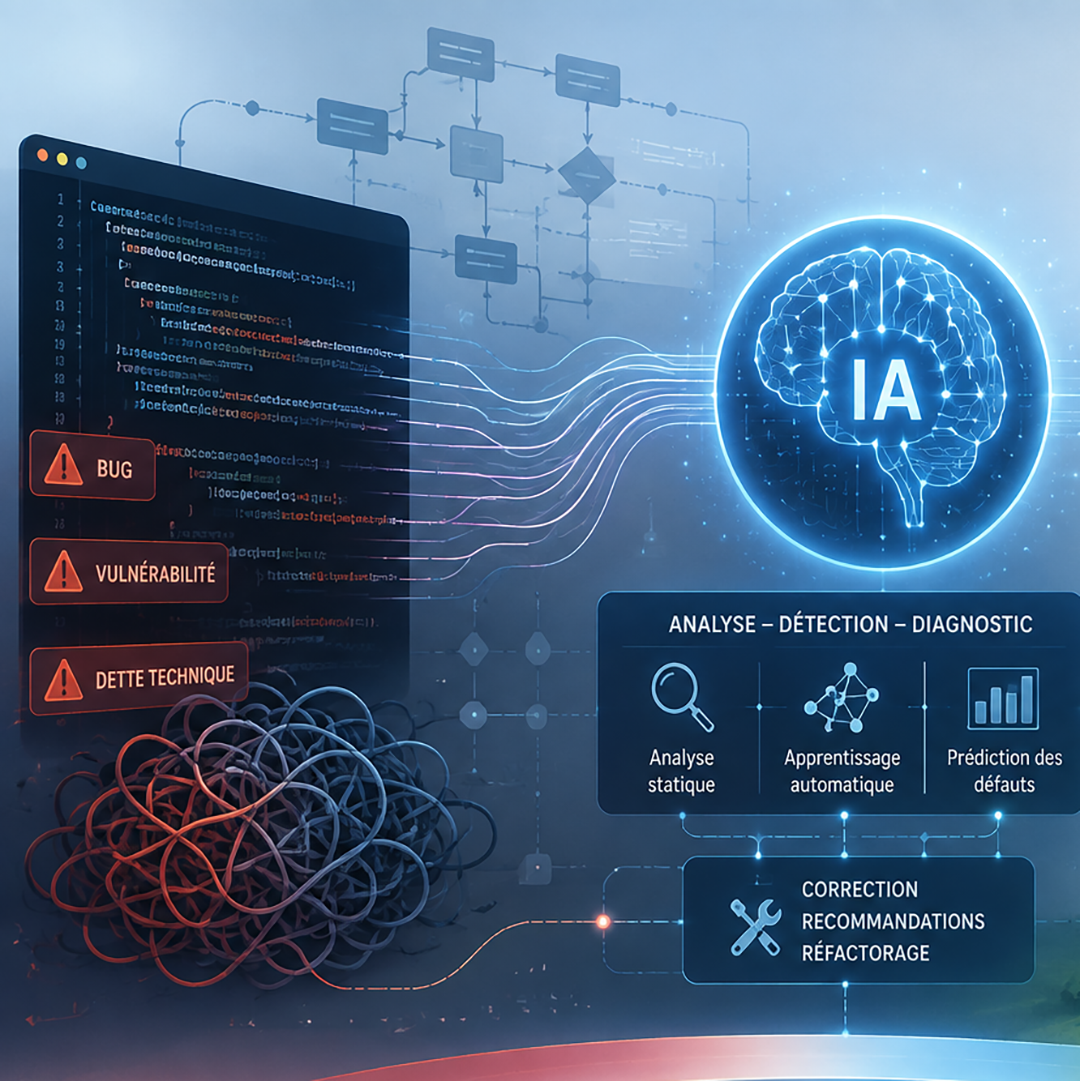
Analyzing and Improving AI-Based Software Systems (2024–2026)
This research project aimed to improve the quality of software systems based on artificial intelligence (AI) by developing methods and tools to detect, diagnose, and correct defects that compromise their performance, security, reliability, and energy consumption. By addressing technical debt and energy inefficiencies in particular, the project proposes solutions to optimize the development and maintenance of AI systems and make them more robust, sustainable, and trustworthy.
LATECE Members: Moha, Avellaneda and Stiévenart

Decoding Stereotypes: Using Affective Neuroscience to Support Intercultural Understanding (2024–2026)
How do cultural stereotypes influence collaboration, trust, and communication in digital environments? This project explores these issues by combining affective neuroscience, virtual avatars, and real-time emotion measurement. By analyzing emotional and behavioural reactions during interactions between people from different cultures, this project aims to better understand the mechanisms that promote or hinder inclusion. The insights generated will enable the development of approaches and tools that promote a better user experience, more effective collaboration, and more inclusive interactions in sectors such as connected health, remote work, and collaborative platforms.
LATECE Members: Balbinot and Mercier

Automatic Antivirus Evasion (2025–2027)
Penetration testing and attack simulation exercises (known as ‘Red Teaming’ campaigns) are essential when auditing an organization’s cybersecurity. To run such exercises on systems equipped with antivirus protection, red teamers use various evasion techniques. A more effective evasion methodology would enable more efficient—and therefore more cost-effective—campaigns, which would in turn help strengthen organizational cyber resilience. The project involves mapping the detection capabilities of a given antivirus program using various software probes, and then deducing the evasion techniques necessary to deploy and execute a payload.
LATECE Members: Privat and Stiévenart
FEATURED PROJECT SHOWCASE

ONGOING PROJECT
LATECE Member Wessam Ajib
The future vision for 6G networks includes unlimited and near-instant connectivity. Reconfigurable intelligent surfaces (RIS) are poised to facilitate this vision.

ONGOING PROJECT (SEEKING FUNDING)
LATECE Members Mylène Aubertin-Leheudre and Sylvie Trudel
Sedentary lifestyles and physical deconditioning of seniors carry significant costs, both in terms of seniors’ physical and mental health but also in terms of the level of care they need from their loved ones and the healthcare system. This digital app features videos of validated and adapted physical activity programs as well as follow-up support from various actors to help increase engagement in adapted physical activities and modify sedentary lifestyles.

PROJECT
LATECE Member Sébastien Gambs
Implementing a provincial digital ID system involves a number of important questions about ethics, data privacy, data usefulness, and data preservation. Beyond the practicalities involved in properly governing, managing, and organizing personal data in keeping with laws and standards and the expectations of governments and citizens, the implementation of digital ID systems must also achieve social acceptability.

PROJECT
LATECE Member Sébastien Gambs
In the field of medical research, and in relation to knowledge development more broadly, machine learning models can now be trained to generate synthetic (fictitious) patient profiles using real patient data. How can we characterize the residual privacy risks of these synthetic profiles?

ONGOING PROJET
LATECE Member Kim Lavoie
Patients are sometimes resistant when physicians and healthcare professionals ask them to change their habits or comply with prescriptions. Motivational communication is a proven approach to help professionals learn this approach but few validated training programs exist. Dr. Lavoie’s MOTIVATOR and MC-CAT projects are looking to bridge that gap.

PROJECT UNDER IMPLEMENTATION
LATECE Members Stéphane Vial and Sylvie Trudel
Why do people living with mental health illness receive less care than those living with cancer? To support patients’ fundamental right to access care and support to achieve recovery, the Mentallys digital app facilitates telemonitoring and user-to-user, peer-to-user, and healthcare professional-to-user communication.
